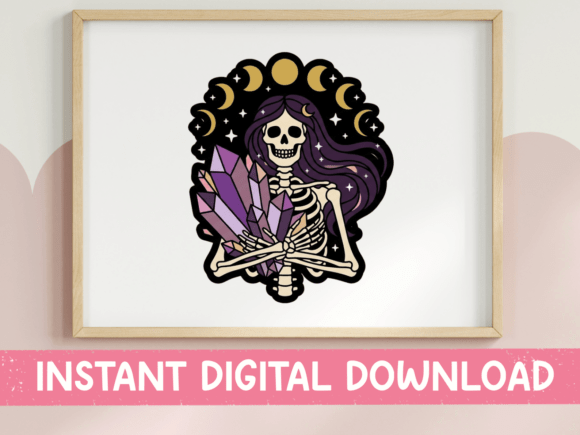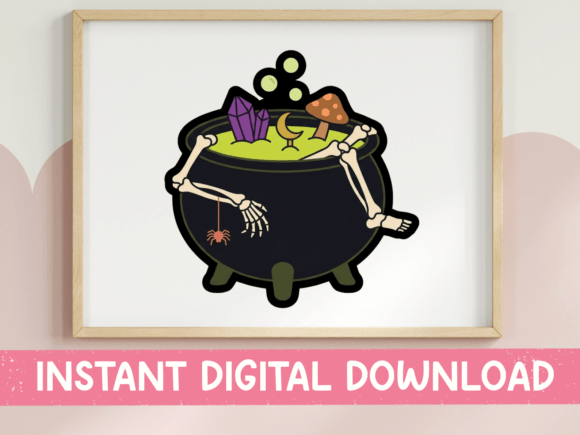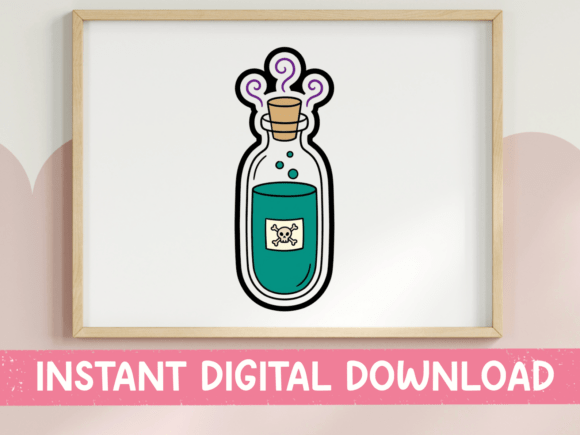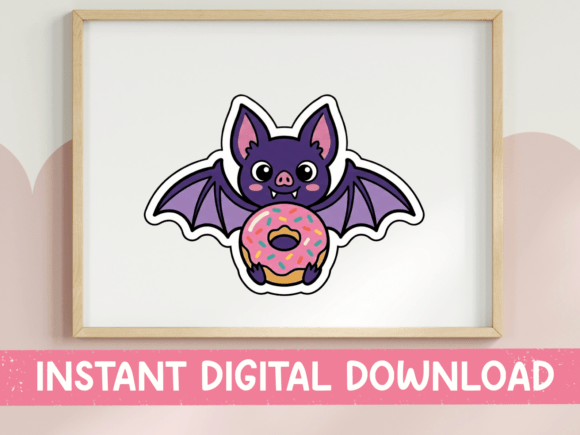
Halloween Witch Broomstick Sticker
A Designer’s First Glance: Spooky, Simple, and Surprisingly Versatile
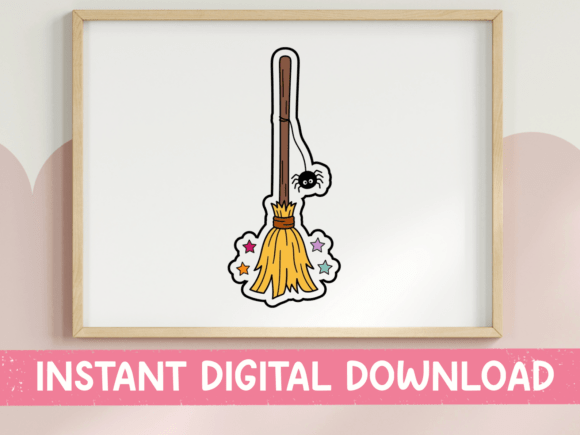
When I opened the Halloween Witch Broomstick Sticker file, I didn’t see just another seasonal graphic—I saw a quiet confidence in its composition. It’s not busy, not cartoonish, not overloaded with glitter or cliché bats. Instead, it leans (literally) into charm: a classic brown-and-amber broomstick tilted at a relaxed angle, with a small black spider clinging to the handle like it’s been there all season. The word “colorful” in the description hints at thoughtful palette flexibility—not neon overload, but warm, earthy tones that translate beautifully across thread types and fabric bases. As an embroidery designer who’s stitched hundreds of Halloween motifs, I immediately pictured this on a natural canvas tote for a local boutique, or as a subtle chest embroidery on a charcoal sweatshirt for teens who love spooky-but-sophisticated style.
Where It Shines: Real Projects, Real Customers
I tested the Halloween Witch Broomstick Sticker as a machine embroidery design on three very different items: a medium-weight cotton tea towel, a brushed poly-cotton baby onesie, and a structured twill cap. On the towel, the broomstick’s clean lines held up perfectly in satin stitch—no puckering, no distortion—even with minimal tear-away stabilizer. On the onesie, the small spider detail stayed legible at 1.8" wide, thanks to balanced stitch density and smart spacing. And on the cap? It worked—but only because I used a smaller-scale version (not the full-size file) and a cutaway + topping combo. That tells me this isn’t just a T-Shirt Designs graphic repurposed for embroidery; it’s built with stitch logic in mind.
For Etsy sellers and craft fair vendors, this design fits naturally into curated holiday collections: embroidered pillow covers for fall mantels, aprons for bakeries running pumpkin spice specials, or personalized gift bags for teachers and neighbors. It’s got enough personality to feel handmade, but enough restraint to avoid looking kitschy. Customers respond well to that balance—it reads as intentional, not generic.
Where to Pause—and Why
This isn’t a one-size-fits-all embroidery file. Its charm lives in its simplicity, but that also means some contexts need extra attention:
- Small hoop sizes: The full broomstick layout needs at least a 4"x4" hoop. Don’t force it into a 3"x3" without scaling down first—the spider detail will vanish.
- Textured or stretchy fabrics: On fleece or jersey, use cutaway stabilizer *and* a light water-soluble topping. The amber fill areas can shift slightly if the base moves during stitching.
- Dark or heavy fabrics: The brown/amber contrast works best on light-to-mid-tone backgrounds. On black fabric, test thread colors carefully—amber thread can mute; consider switching to burnt orange or rust for clarity.
- Curved surfaces: Caps and mugs (if digitized for sublimation later) benefit from slight curve compensation. If you’re using this as a digital embroidery file for commercial embroidery, ask your digitizer to verify contour alignment before bulk production.
Design Integrity in Action
What sets the Halloween Witch Broomstick Sticker apart isn’t novelty—it’s cohesion. As a graphics-based embroidery design, it avoids overloading with unnecessary elements. No background, no drop shadow, no extra text. That makes it ideal for layered projects: think an embroidered patch sewn onto a denim jacket, then topped with a hand-stitched spider web in white thread. It leaves room for *your* voice as a maker.
It also builds trust. When customers see this on a finished product—say, a linen kitchen towel sold by a small shop—they don’t wonder if it’s a cheap print. They see crisp satin-stitched wood grain on the broom handle, clean fill stitch in the amber bristles, and a spider whose eight legs are distinct, not blobbed. That clarity signals professionalism. It says, “This was chosen and stitched with care.”
Practical Notes Every Embroiderer Should Check
Before cutting fabric or loading your hoop:
- Run a test stitch on scrap fabric matching your final project’s weight and weave.
- Check thread color contrast—especially on dark or patterned backgrounds. A printable mockup helps visualize this fast.
- Review stitch density: too dense = stiff fabric; too sparse = gaps in the broom bristles. This design lands in the sweet spot, but always verify.
- Confirm licensing: since it’s listed under Graphics, double-check whether it permits commercial use on finished handmade products—or if it’s limited to personal projects.
- Inspect small details: zoom in on the spider. Are its legs defined? Does the handle taper cleanly? If not, a quick edit in your embroidery software may be needed.
- Test black-and-white rendering. Many buyers preview embroidery digitally before ordering—this design holds up well in grayscale, which boosts Etsy visibility and mockup accuracy.
Final Thought: Not Just for October
I’ve already used the Halloween Witch Broomstick Sticker outside of peak spooky season—on a neutral-toned nursery pillow (“Witchy Whimsy” collection), on a librarian’s custom tote (“Spells & Stories”), even as a subtle back-embroidery on a unisex apron for a bookstore café. Its quiet confidence gives it longevity. It doesn’t scream “Halloween!”—it whispers “craftsmanship,” “intention,” and “a little magic in the everyday.” For embroidery designers, craft business owners, and makers building a recognizable handmade product line, that kind of versatility isn’t just convenient. It’s valuable.